Magical Christmas Village 3D Gem Art DIY Kit - Beaded Acrylic Village Craft
Sale price
$24.98
Regular price $59.99
No glue · No drying time · Catches the light
A village you build one gem at a time.
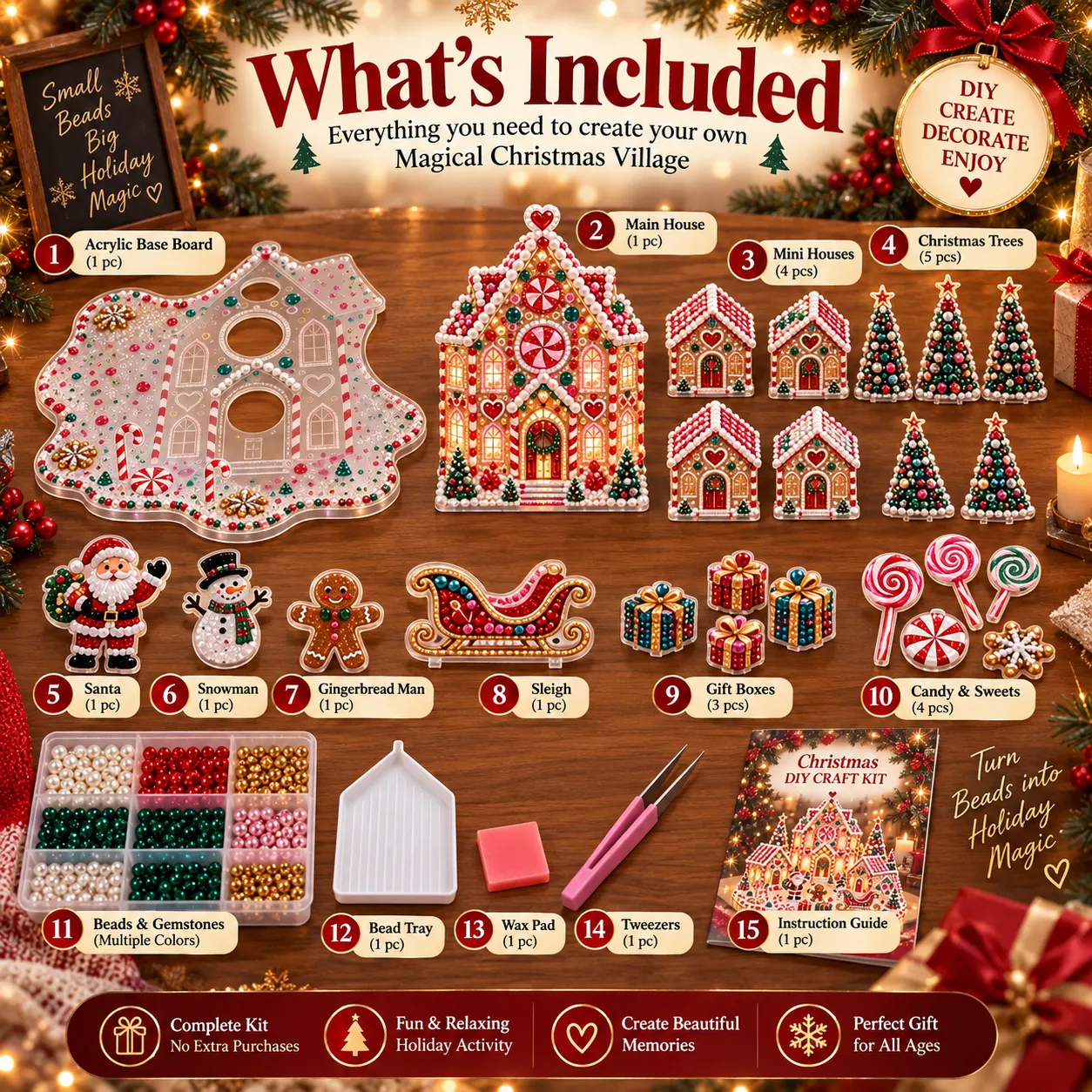
Everything you need arrives in one box, a main house, four mini houses, five trees, and a small cast of characters to stand in the snow. The outlines are already printed on the acrylic in the exact bead colour that belongs there.
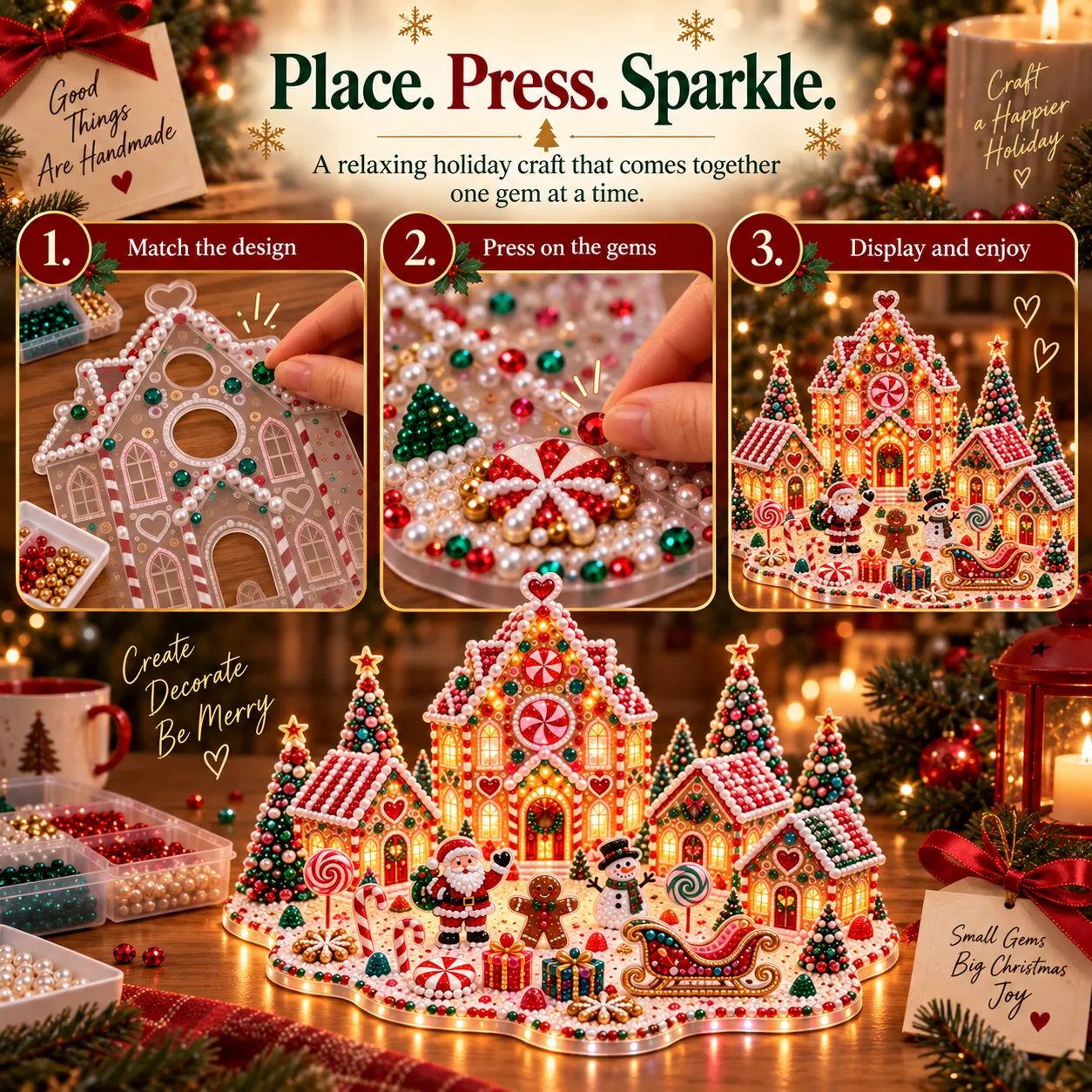
You match the print, press a pearl or a gem into the slot, and move on to the next one. No glue, nothing to dry, nothing to get wrong — the recess decides where each piece sits.
The finished build, sitting on a table with a candle behind it.
In the box
Everything is cut, sorted and labelled
The acrylic pieces come pre-cut, so there is no snapping, no trimming and no sharp edges to sand. The beads are already sorted into a twelve-compartment tray by colour, which matters more than it sounds — digging for one ruby in a mixed bag is how these kits end up half finished in a drawer.
The wax pad
A small square of tacky wax. Press a gem into it and the gem stays put while your other hand positions the house — the single most useful thing in the box.
The bead tray
A moulded plastic rest that holds one piece at a working angle, so the flat acrylic does not slide around under your hand.
The tweezers
For the pieces under six millimetres — the star tips, the tiny red dots along the roofline. Fingers are too blunt for those.
How it goes
Three steps, and none of them need to dry
There is no curing time between pieces, so you can pick the box up, work for twenty minutes, put it down, and come back the next evening without losing anything. Most people finish the main house in one sitting and add the mini houses over the following week.
Up close
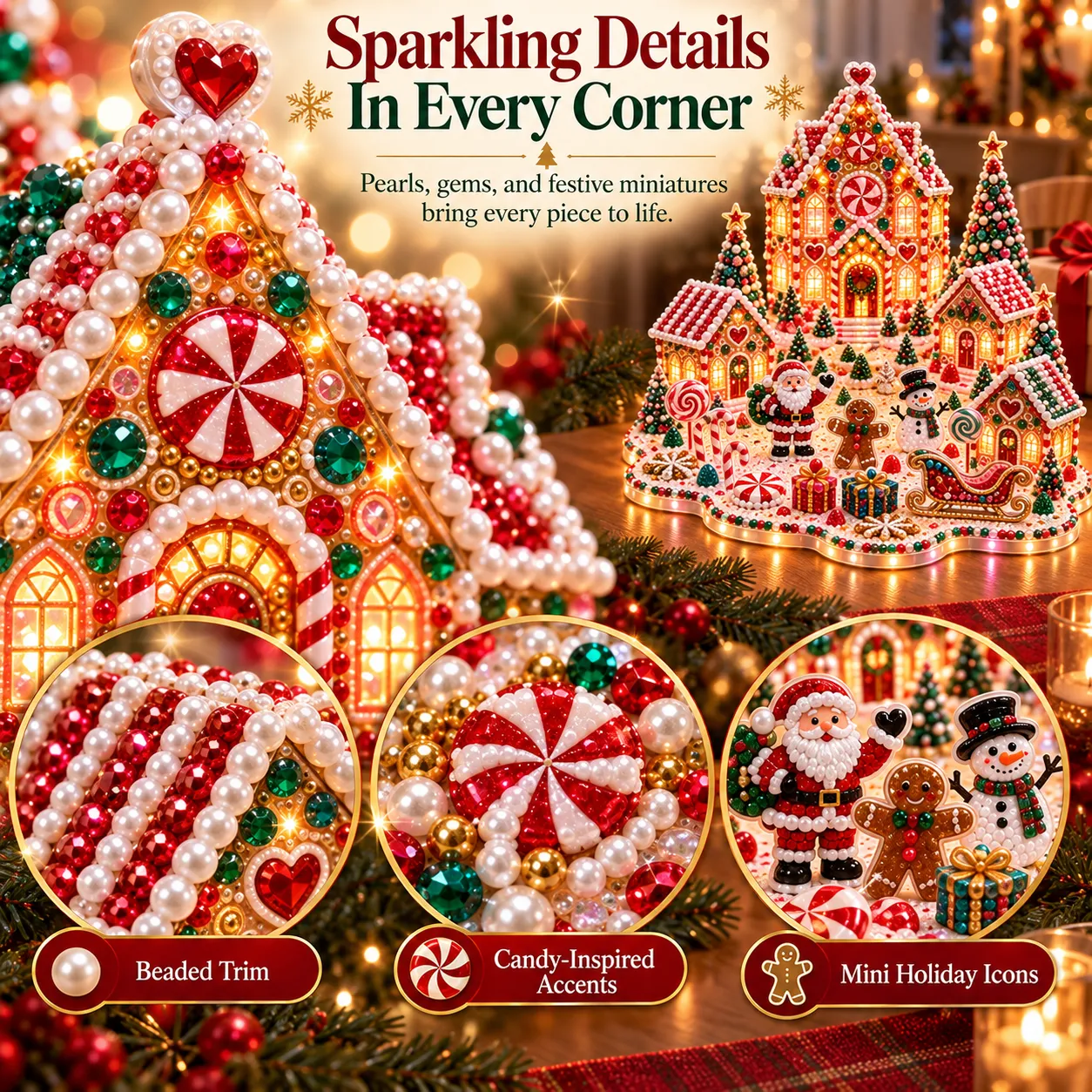
The gems are faceted, not printed
Every red and green piece is a cut acrylic stone with real faces on it. That is the whole reason the finished village looks different from a flat sticker scene — put a candle or a strand of tree lights anywhere near it and the faceted stones pick the light up and scatter small points of colour across the tablecloth.
The pearl beads are the second trick. They run in unbroken lines along every roofline and eave, which is what gives the houses their gingerbread-icing look. They sit slightly proud of the surface, so the outline stays visible even from across a room.
Where it goes
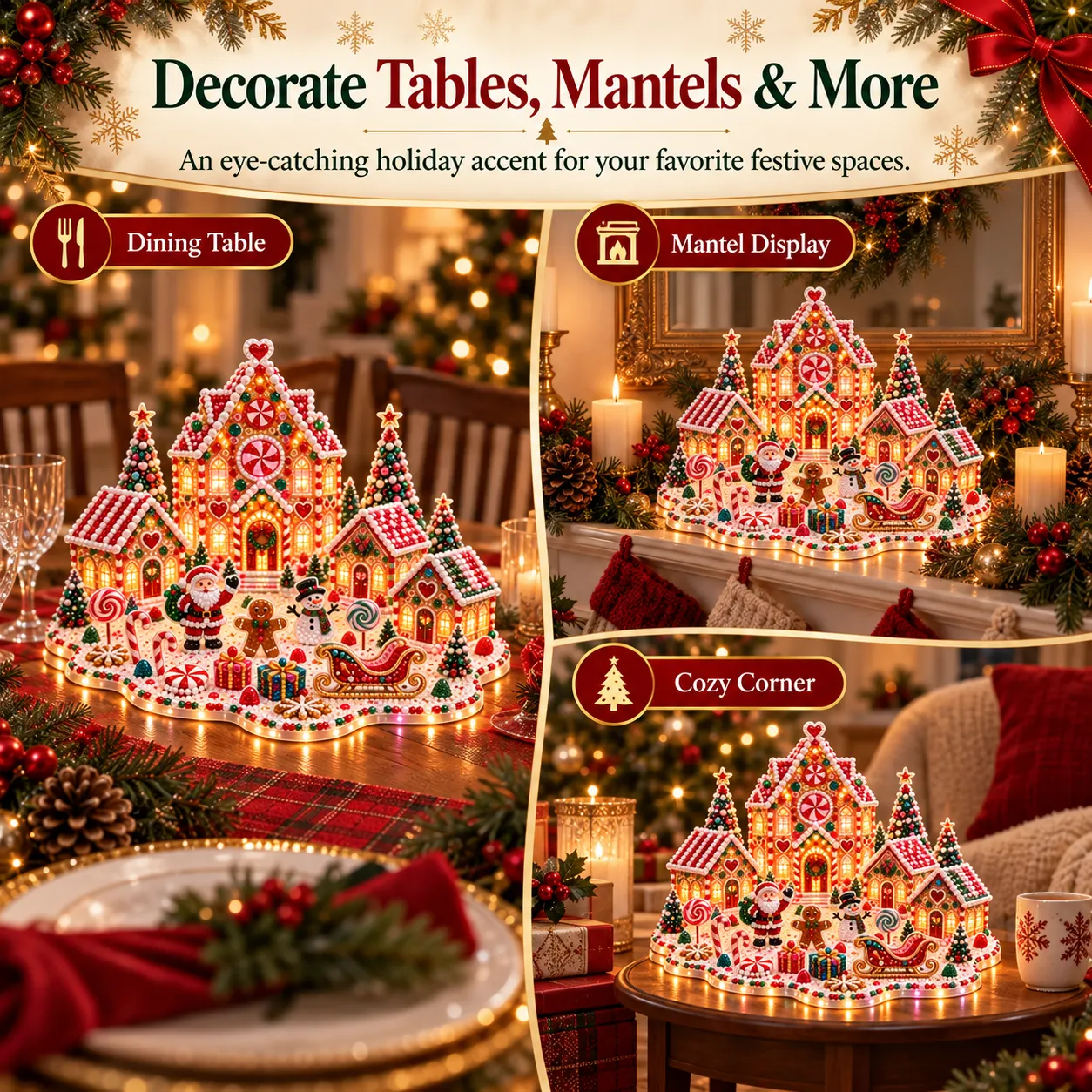
Small enough for a side table, big enough to be the centrepiece
The base is thoughtfully designed to fit beautifully into any space, so it fits a dining table without crowding the plates, and it does not disappear on a mantel either. The scalloped edge means it sits level on cloth or bare wood — no wobble, no coaster needed.
It also packs flat. Because nothing is glued down, the pieces lift off the base and stack in the original box, which is how it survives eleven months in a cupboard and comes back out intact.
Two pairs of hands
A job that suits a kitchen table in December
One person can sort the beads into their compartments while the other starts on the main house. The work is repetitive in the good way — you can talk over it, and there is no moment where a wrong move ruins the piece, because the pieces lift straight back out.
It is also the sort of gift that keeps giving after it is opened. Handing someone a box they finish themselves takes an hour of an evening and turns into an object on their mantel — not something that gets quietly re-gifted in January.
How it reads
Built in layers, so it never looks like a flat cut-out
The main house stands tallest at the back. The four cottages step down and forward on either side. Five pines fill the gaps behind them, and the characters — Santa, the snowman, the gingerbread man — sit in the open snow at the front where they can actually be seen.
That layering is what separates a village from a display board. From the side it has depth; from above, it fills the base edge to edge.
Next December
Nothing about it expires
Acrylic does not yellow, the beads do not lose their coating, and there is no glue to go brittle and let a roof slide off in year three. Built once, it comes back out every December exactly as it went in.
Which is the quiet argument for making it yourself rather than buying a finished ornament: the thing on the mantel is the evening you spent on it.
Some things are better made slowly.
A village does not arrive finished. It arrives as a flat sheet of acrylic and a tray of small bright things, and it only becomes a village because somebody sat down in December and put every one of them in place.
That is the part worth keeping — not the object, but the evening, the second cup of tea, the person across the table reaching for the same tray of gold beads.
Whichever scene you pick, it will still be standing on the mantel long after the wrapping paper is gone.